
















Skip to the main content.

Why Netenrich

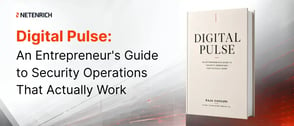
Digital Pulse: A Book by our CEO

Digital-Tone-An-Entrepreneurs-Guide-to-Security-Operations-That-Actually-Work

Partner Programs

Technology Partners

Digital Pulse: A Book by our CEO

Digital-Tone-An-Entrepreneurs-Guide-to-Security-Operations-That-Actually-Work

Customer story: Global data security software company

Code leaking to GitHub. Two SIEMs. A phishing backlog.

More tools weren't the answer. Netenrich modernized their security operations.

Coming out of a major acquisition, this global software company had AI-assisted code slipping into public repositories, two SIEMs running side by side, and every reported phish triaged by hand. Netenrich put eyes on the external attack surface, proved every detection before retiring Splunk, and automated phishing response end to end. Today they run one platform and see 9 things a week that matter instead of 49,000 that don't.

Verified Story

Executive Brief

Global data security software company

INDUSTRY Enterprise data security and cyber resilience software
SIZE Global enterprise, recently expanded through acquisition
CUSTOMERS Many of the world's largest enterprises
NETENRICH Netenrich Autonomous Security Operations
Citrix image 38 Juniper_Networks_logo Cohesity_logo Hewlett_Packard_Enterprise_logo Monks_Logo_Netenrich_Partner netscaler-logo-black axis-securities-logo nuvama-logo royal enfield logo Arctera-logo 1024px-Tibco_logo-_Palo_Alto,_CA_company-_(PNG)_2013-11-24_16-00 spotfire-logo jaspersoft-logo logo-3 logo_1 logo_2 logo Veritas Logo Vector
The results

From 49,000 signals to the 9 that mattered.

How Netenrich filtered 99.98% of telemetry noise without alert fatigue.

One week in the customer's SOC

Weekly volume after go-live

99.98% noise filtered
49,000 Multi-cloud, endpoint & network telemetry
signals generated
Multi-cloud, endpoint & network telemetry
100% ingest
~2,800 94.3% clustered
correlated situations
Automated context assembly & deduplication
Industry avg: ~12,000+ loose alerts
~64 Agent investigated
actionable events investigated by Netenrich
Deep analysis without taxing Tier-1 analysts
97.7% reduction from situations
9 only true positives
needed the customer's attention
9 critical escalations total for the entire week
Industry avg: ~240 human escalations/wk
51 seconds
MTTT
Mean Time to Triage
Industry avg: ~4.5 hrs
2.5 Minutes
MTTR
Mean Time to Respond
Industry avg: ~ 14.2 hrs

99.9%+ of telemetry filtered before it reached an analyst, with every escalation scored for likelihood, impact, and confidence.

From expired contract to live SOC

4 weeks

Google SecOps stood up and identity, EDR, and cloud sources onboarded while Splunk ran on its grace period.

  • See it Code exposure monitored
  • Prove it Splunk decommissioned
  • Run it Phishing triage automated

Challenges and solutions

Their SOC got faster every year. It never got smarter.

Every tool they added made the team quicker at handling the known. None of them showed what was exposed, proved what was working, or took routine work off the team's plate. Netenrich fixed all three.

Where they started: the efficiency plateau

Plenty of tools. No proof any of it worked.

Splunk SIEM Google SecOps Legacy MSSP KnowBe4 ServiceNow GitHub


Hundreds of millions of notable events. Generic alerts from a black-box MSSP. No confidence in the triage. Every tool made the SOC busier at handling the known, and none of them answered the question a CISO actually gets asked: are we safer?

Step 1

See it

Know what you've exposed

Public exposure gaps closed

The pain

AI-assisted code was leaking to public GitHub, and nobody was watching.

Developers moving fast with AI coding tools pushed code to public repositories. There was no external attack surface visibility and no monitoring to catch a leak.

What Netenrich did

Continuous external attack surface management on public code.

We put continuous EASM coverage across public repositories to flag sensitive data and code exposures as they appear, and drive them to remediation.

Step 2

Prove it

Trust every detection

Live on Netenrich in 4 weeks

The pain

Paying twice to run two SIEMs, on an expired contract.

Splunk ran beside Netenrich ASO while legacy use cases were rebuilt. Duplicate work, duplicate licensing, ingestion near 3 TB a day, and a Splunk contract already in its grace period.

What Netenrich did

Every detection translated, tested, and proven. Then Splunk was switched off.

We moved every Splunk use case into Netenrich ASO and validated each one before cutover, so retiring the old SIEM never meant losing coverage.

Step 3

Run it

Take the routine off the team

Manual phishing triage eliminated

The pain

Every reported phish became a manual ticket.

High-volume KnowBe4 user reports had no automated path into SOAR or ServiceNow. Analysts spent their days building tickets instead of hunting threats.

What Netenrich did

Phishing response automated from report to ticket.

KnowBe4 reports now flow straight into Netenrich ASO for automated parsing and investigation, and finished tickets route to ServiceNow with no one copying and pasting.

Where they are now: above the efficacy line

Not a faster SOC. A smarter one.

With exposure visible, detections proven, and routine work automated, the team stopped measuring how fast they closed alerts and started measuring whether they were preventing the right things. In a typical week, 49,000 signals now become 9 that need their attention.

module

More tools made them busier. Not safer.

Every acquisition leaves the security team with two of everything. This one left them with two SIEMs, two sets of detections, and two bills, on a Splunk contract that had already run out.

The work didn't pause for the integration. Employees did exactly what security training told them to do and reported suspicious email through KnowBe4, and every one of those reports landed on an analyst as a ticket to build by hand. At the same time, developers moving fast with AI coding assistants were pushing code into public GitHub repositories where no one was looking.

None of this was a shortage of tools. The team had plenty. What they didn't have was confidence. Their previous MSSP sent generic alerts out of a black box, they were sifting through hundreds of millions of notable events, and nobody could say with certainty which detections actually worked. The SOC had become efficient at handling the known and blind to everything else.

Netenrich started where the risk was least visible. See it: we put continuous attack surface monitoring on public code, so exposures are flagged as they appear. Prove it: we translated every Splunk use case into Netenrich ASO and tested each one before cutover, so the team could retire Splunk knowing nothing had slipped. They were live in four weeks. Run it: we built a phishing pipeline from KnowBe4 through Netenrich ASO to ServiceNow that handles the volume without a human building tickets.

Throughout, the team kept full visibility. No black box: they co-engineer the workflows while Netenrich carries the operational load.

Today they run one platform and one streamlined SOC. Level 1 and Level 2 triage is off their plate, and their analysts spend their time on threat hunting and strengthening posture. That's what modernizing security operations looks like: not more speed, but proof that the work is making them safer.

EXECUTIVE PERSPECTIVE

“[We didn't need another tool. We needed to see what we'd exposed, prove our detections worked, and get routine work off my team. Netenrich did all three, and had us live on Google SecOps in four weeks.]”

CIO, global data security software company

More customer stories

Cloud Software Group / Enterprise software

From 1,920 incidents a month to fewer than 10, and AI prompt secrets exposed

Read the Story

Digital-first / marketing company

Rebuilding trust: a digital-first marketing giant's security transformation

Read the Story

YOUR ENTERPRISE / Agentic SecOps

From hidden AI threats to provable readiness: see how much time and budget your SOC could save.

Try Agentic SOC

Is your SOC getting faster, or getting safer?

Spend 30 minutes with our security architects. We'll show you what you've exposed, which detections you can prove, and what your team should never touch by hand again.